

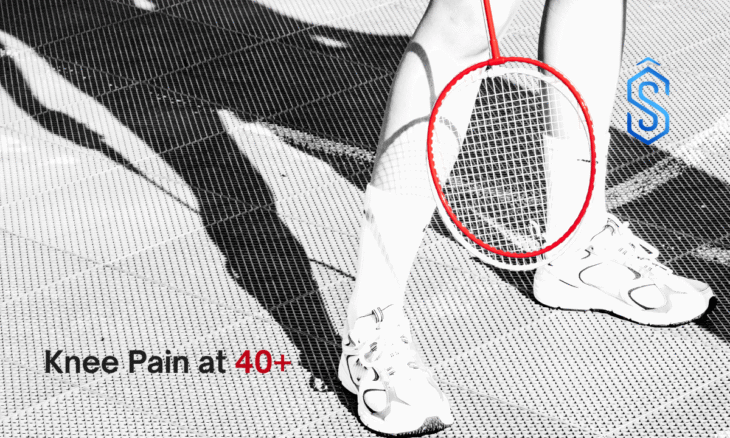
I meet many people in their 40s who are doing “everything right” – walking daily, losing weight, joining badminton or football groups, even completing 5Ks.
Fitness improves, but knee pain starts to show up. The confusion is real: “Doctor, I’m fitter than before – why does my knee hurt now?”
Here’s what I explain from clinical experience: at 40+, your engine (heart–lungs) can improve faster than your suspension system (cartilage, meniscus, tendons, ligaments, and the way your hips/ankles control load).
If training intensity rises faster than tissue capacity, knee pain shows up – especially because the knee takes the brunt of cutting, jumping, and sudden deceleration.
- Why do joints hurt even when fitness improves?
Because fitness ≠ joint readiness, especially when it comes to knee pain.
Cartilage and meniscus don’t “condition” like muscles. They adapt slowly, so sudden increases in running, court sports, or trekking can trigger knee pain.
Muscles get stronger, but movement control may lag. Weak glutes, stiff ankles, or tight hamstrings in 40+ athletes shift excess stress to the knee.
Old injuries return as “new knee pain.” Past ligament sprains, untreated meniscus tears, or malalignment can stay silent until sports intensity increases.
Recovery time changes with age. Stress, poor sleep, and inadequate strength or protein intake reduce tissue recovery and increase pain risk.
Pain is not always “damage” – often knee pain is the body’s early warning that load is exceeding capacity.
Also Read: Shoulder and Knee Pain in Seniors: Early Intervention Can Preserve Independence
Also Read: Zydus Pinkathon Makes Landmark Comeback in Pune, Set for April 5, 2026
Top 3 causes of knee pain I commonly see in 40+ players
- Cause 1: Early Osteoarthritis (OA) / “Wear and overload”
- Knee pain from early OA isn’t just “old age.” In the 40s, cartilage wear can be triggered by repetitive impact, excess weight, past injury, or alignment issues. Symptoms include pain after sport, stiffness after sitting, and creaking or grinding.
- Cause 2: Degenerative meniscus tears
- In 40+, meniscus tears often develop gradually. Pain typically worsens with squatting, stairs, deep bending, or twisting during sports like badminton or football.
- Cause 3: Patellofemoral pain and tendinopathy
- This front-of-knee pain group includes kneecap irritation and tendon overload. It’s common in jumping sports and in athletes who train legs without correcting hip strength or ankle mobility.
- (And sometimes it’s not the knee at all – hip arthritis, lumbar nerve irritation, or ankle stiffness can refer pain to the knee.)
Knee pain Danger Signs You Should Not Ignore
Don’t push through if you notice:
- Swelling after activity or the next day
- Locking or inability to fully bend or straighten
- Giving way or buckling, especially on stairs
- Night knee pain or pain at rest
- Fever, redness, calf swelling, or severe pain after a pop
These signs may indicate significant injury or inflammation requiring medical evaluation.
- My best “restart sports” rule to reduce pain
- Earn your sport with strength and pacing.
- Follow a 3-week build → 1-week deload cycle, and don’t increase volume or intensity by more than 10–15% per week.
- Before full games, you should be able to do – without knee pain or swelling:
- Controlled step-downs
- A 30–45 second wall-sit
- A short jog–walk session
- Always warm up properly: 8–10 minutes of brisk movement and dynamic drills. Cold joints plus sudden sprinting is a classic trigger for knee pain.
One simple daily habit to protect against pain
- Two minutes of knee-alignment strength daily:
- Sit-to-stand from a chair (slow, knees tracking over toes) × 10
- Wall-sit or Spanish squat hold × 30 seconds
- This builds endurance and teaches the knee to tolerate load – without impact.
If you’re fit at 40+, that’s a gift. To prevent knee pain, treat your knees like an investment: progress gradually, build strength, respect recovery, and listen to swelling. The goal isn’t to stop sport – it’s to keep you playing for decades.